ONE WORK CELL.
THREE PLATFORMS.
ANY APPLICATION.
More output. Better data. Safer crews. One modular platform that adapts to the application.
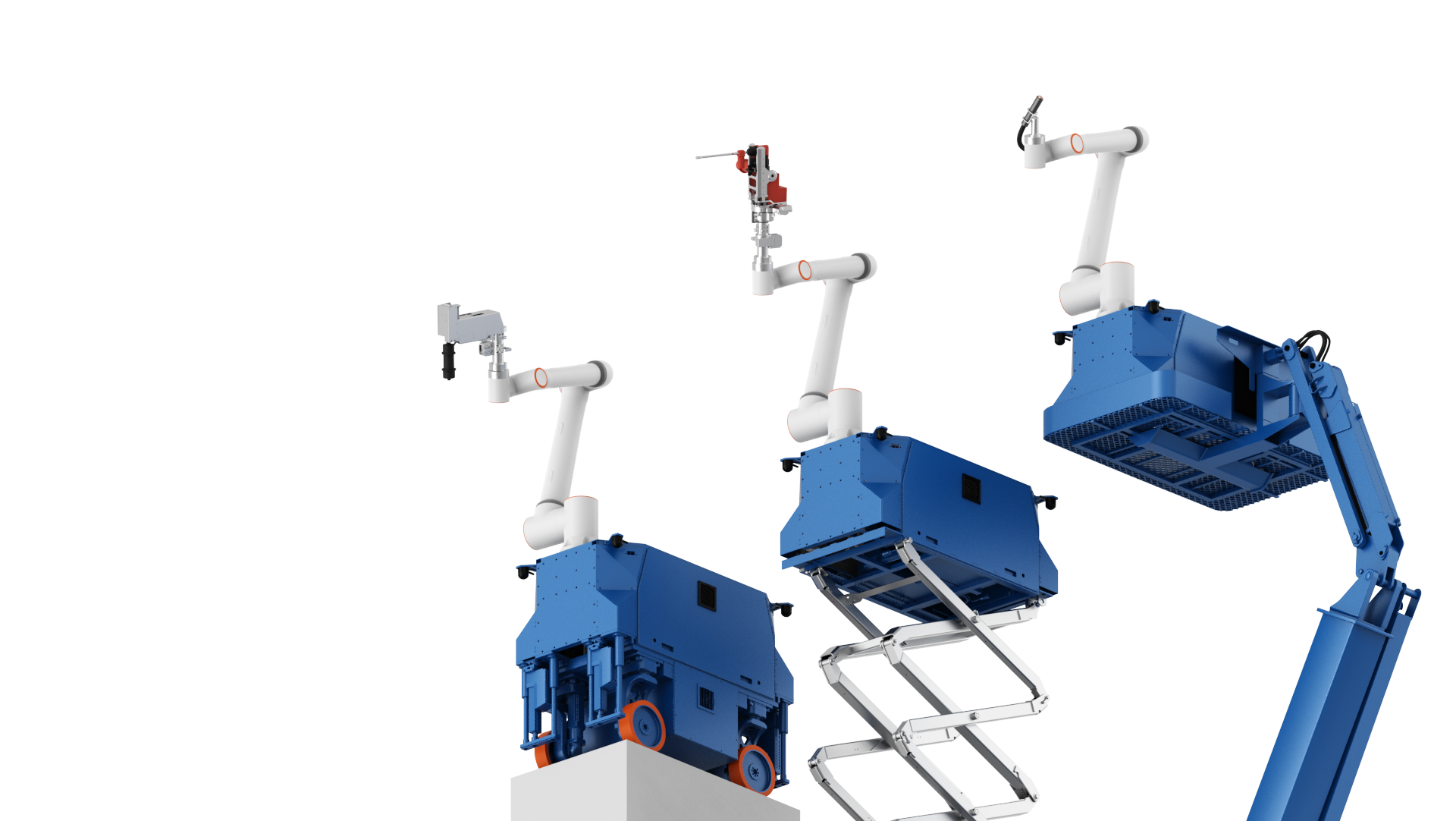
ONE SYSTEM.
UNLIMITED REACH.
One work cell mounts onto any standard MEWP platform. Swap the base, keep everything else: same software, same applications, same training.
AMF Work Cell
Robotic arm, compute stack, and universal tool interface in a single transferable unit. Moves between any MEWP base in under 30 minutes.
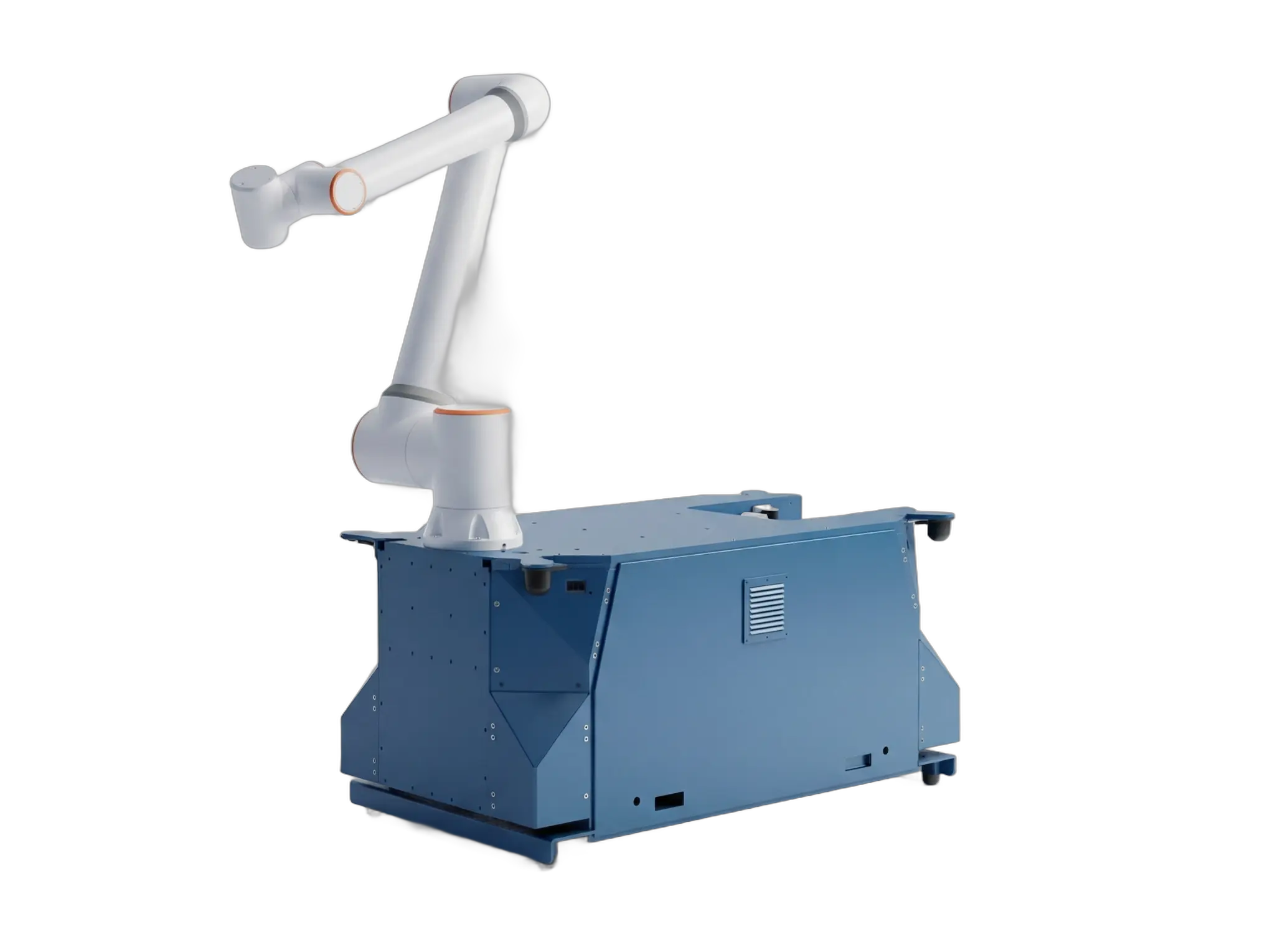
Purpose-built for the MEWP platforms your crews already operate. No custom hardware modifications. Same work cell and application suite across all configurations.
ONE PLATFORM. A GROWING SUITE OF APPLICATIONS.
The AMF's open tool interface accepts any handheld industrial tool. Like a smartphone and its app store, the platform is the enabler. Each application is purpose-built for a specific trade need, but they all share the same controls, the same UI, and the same operator certification.
Estimate Your Savings →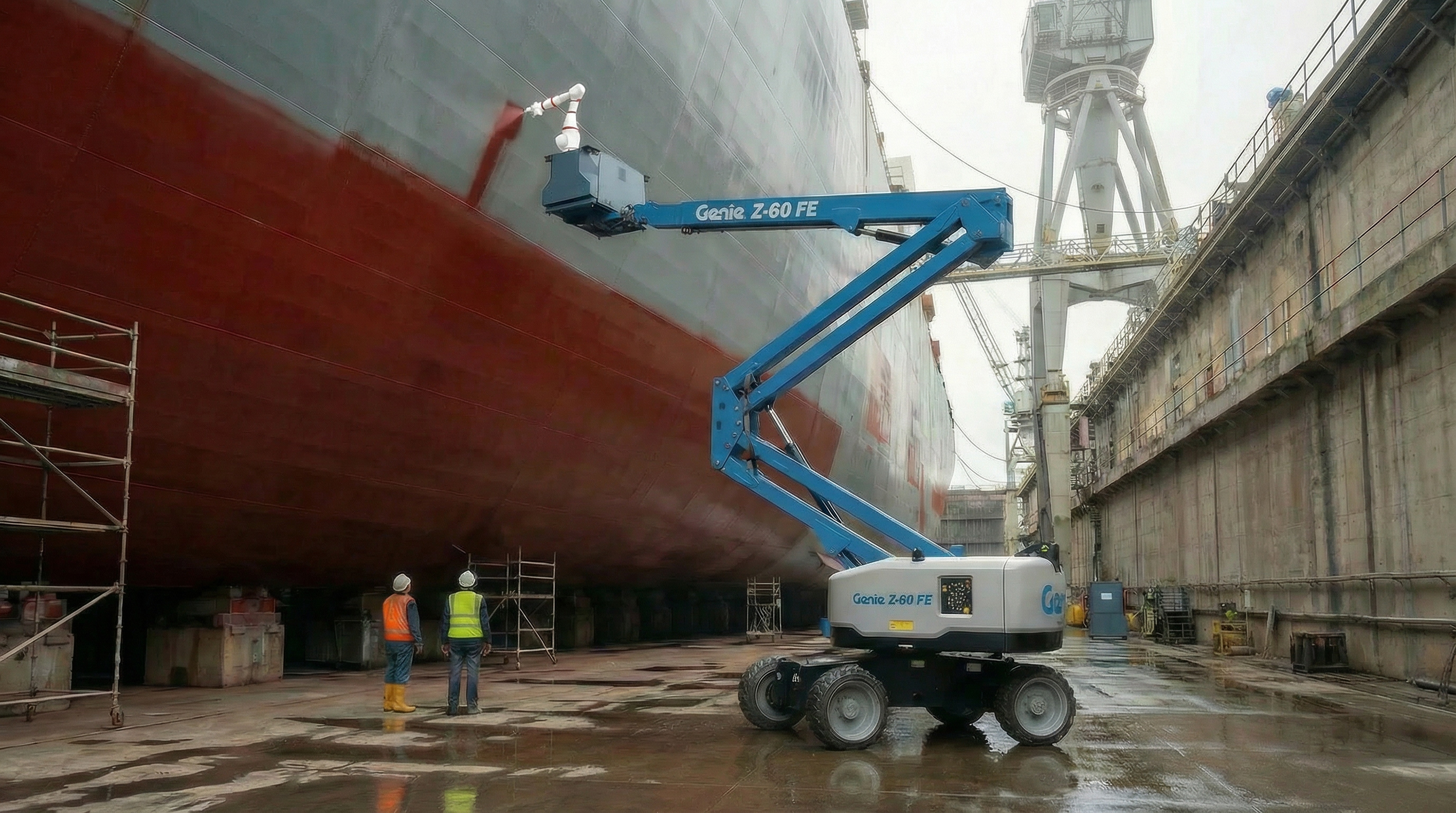
Layout, drilling, fastening, and scanning on active job sites.
View All Videos →TWO PATHS TO DEPLOYMENT.
Start with a co-development partnership to build your custom application, or deploy immediately through traditional sales channels.
Identify your highest-value application and operational constraints.
On-site evaluation of environment, workflow, and integration requirements.
Configure the AMF for your specific application with iterative field testing.
Deploy on a live project. Benchmark against your existing process.
Expand to additional applications, sites, and fleet size based on results.
Your application built on our platform. You define the problem, we engineer the solution together.
Co-development partners get first access to new capabilities and priority support for custom applications.
Phased approach with clear benchmarks at each stage. No large upfront commitment.
Your field expertise combined with our robotics engineering. Better outcomes than either team alone.
Ready to explore a co-development partnership?
FIELD RESULTS.
Construction, healthcare, and industrial sites
Layout, drilling, and as-built scanning
Active development or partner negotiation
Documented at St. Jude Children's Hospital
Consistent accuracy across full floor plates
REAL PROJECTS. REAL RESULTS.
Deployed on active jobsites. Every deployment benchmarked against the existing manual process.
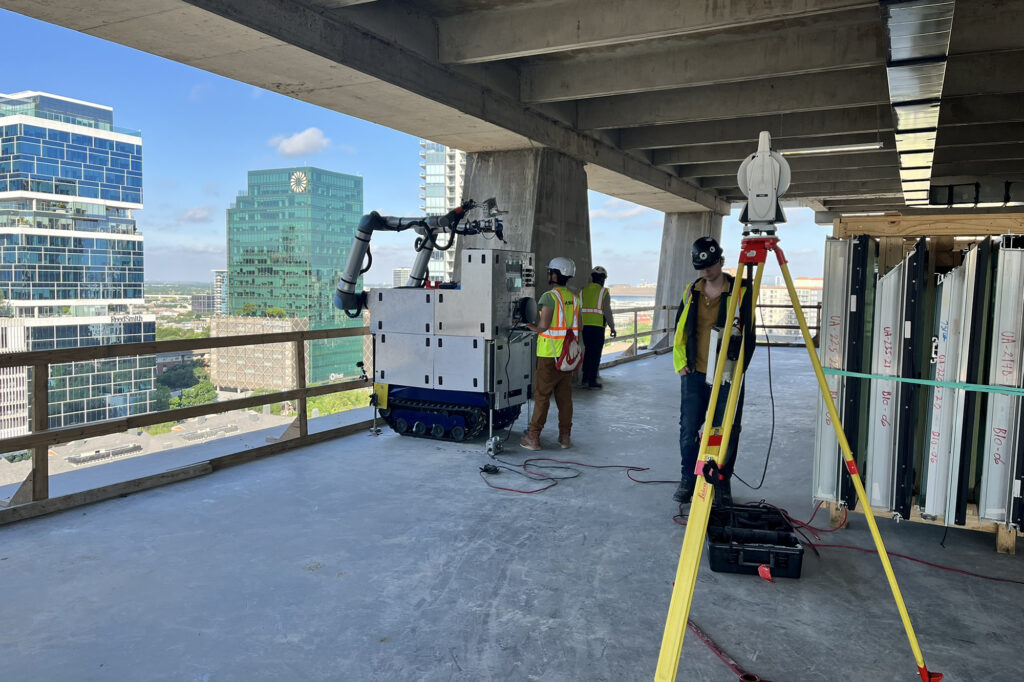
Eliminating Rework at St. Jude Children's Hospital
10,000 curtain wall panels across two 15-story towers. After manual layout failed tolerances, Raise completed the remaining floors.
"Once the robot's ready with the digital plans and has been calibrated to its initial points, then it's a little faster than a human to do layout enabling us to stay in front of crews."
"When doing layout by hand we saw $100,000 to $130,000 worth of rework. After that expensive lesson, we brought in Raise Robotics."
"If you can efficiently do a job and take all the safety risks out of it, any contractor would sign up. Workers would much rather be inside the handrail operating a robot than hanging off the edge."






BUILT FOR ACTIVE JOBSITES.
E-stop, area monitoring, and speed-limited collaborative zones. Designed for active jobsites, not caged-off cells.
LiDAR and camera-based awareness detects personnel, obstacles, and changing conditions in real time.
Cloud-connected diagnostics via Foxglove with real-time telemetry and remote intervention.
Every task is digitally recorded with positional data, timestamps, and quality metrics for compliance and QA.
BUILT FROM THE JOBSITE UP.
Raise started with curtainwall bracket installation: repetitive, physically demanding work at height. To deliver that process, we integrated layout, drilling, material handling, and verification into a single mobile work cell. Each integrated tool turned out to have standalone value far beyond the original application.
Customers started asking for more. Layout became its own application. Drilling became another. Scanning followed. Each started as a customer request backed by real purchase volume. That's still how we work: every new application starts with a customer who has a specific need and the volume to justify it.
Single-purpose machines rarely leave the yard. Low utilization, hard to sell in volume, unattractive for distributors. The skid-steer proved the alternative: one base with swappable attachments replaced dozens of standalone machines and built massive market share.
The AMF applies this principle to robotic fabrication. But it's not a general-purpose robot. Every application must be a shared pain point across industries, carried by high volume, high hazard, or high rework. Drilling, layout, painting, inspection: tasks that look identical whether you're building a hospital, a data center, a ship hull, or a pressure vessel. Cross-industry demand keeps utilization high.
Curtainwall bracket installation: the application that started it all.
AMF proven on live construction sites. First off-the-shelf applications released.
Layout, drilling, and scanning deployed across multiple project types.
New applications in development, driven by customer demand and purchase commitments.
THE TEAM.

Robotics engineer with a background in sim-to-real transfer for autonomous vehicles. UC Berkeley. Leads strategy, product, and investor relations.
LinkedIn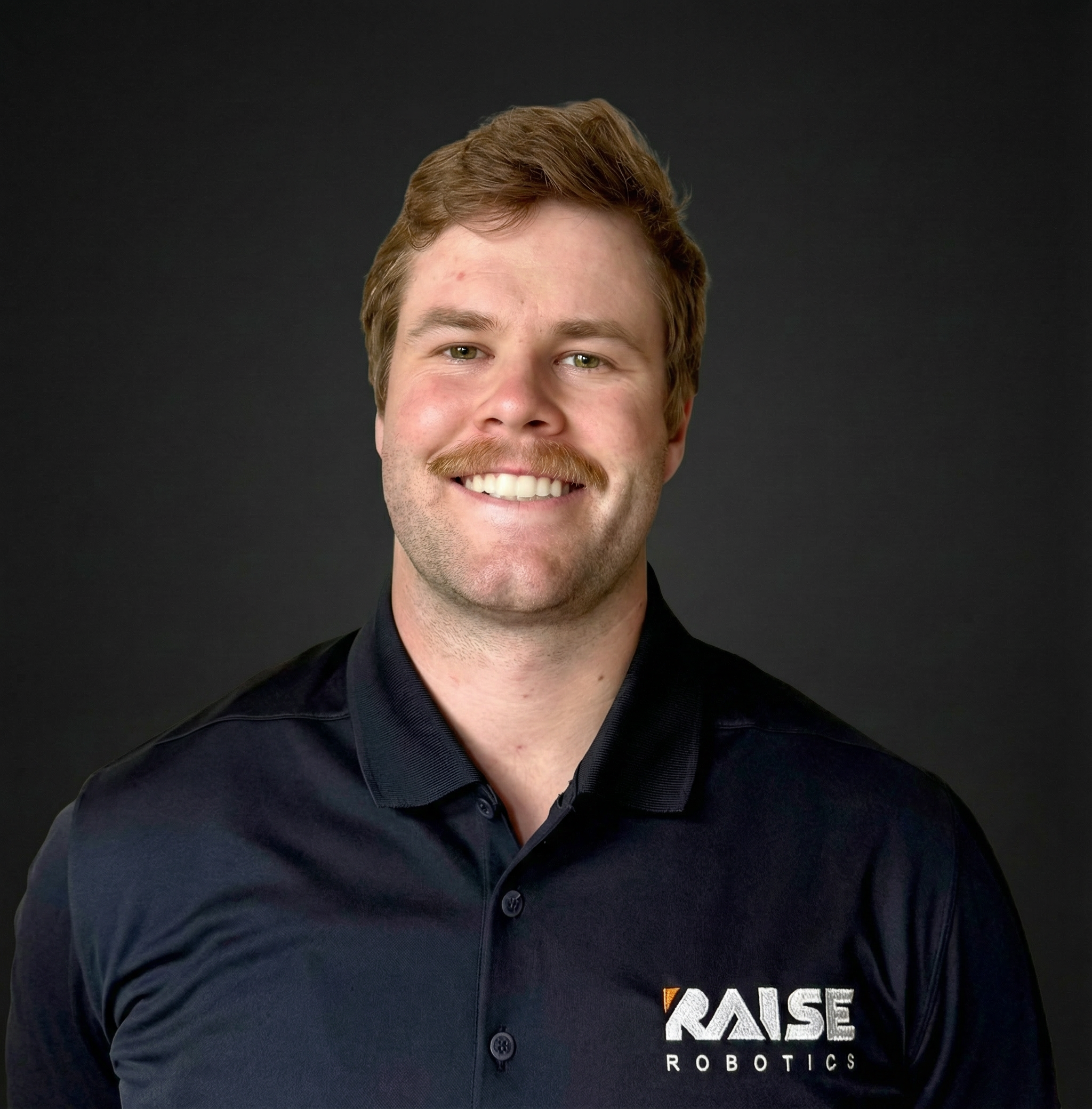
Former construction equipment sales. Saw firsthand how single-purpose machines fail on utilization. Leads operations and commercial execution.
LinkedIn
Builds Physical AI systems across the full embodied pipeline. Previously Tortuga AgTech, where robots earned TIME Best Inventions and Ag Robot of the Year.
LinkedInFROM THE FIELD.
INDUSTRY RECOGNITION.
LET'S CO-DEVELOP
SOMETHING NEW
If you have an application that requires mobile reach, CNC-level accuracy, and flexible deployment across elevations, let's talk. We'll tell you in 30 minutes if it's a fit.